
E. F. Pittman
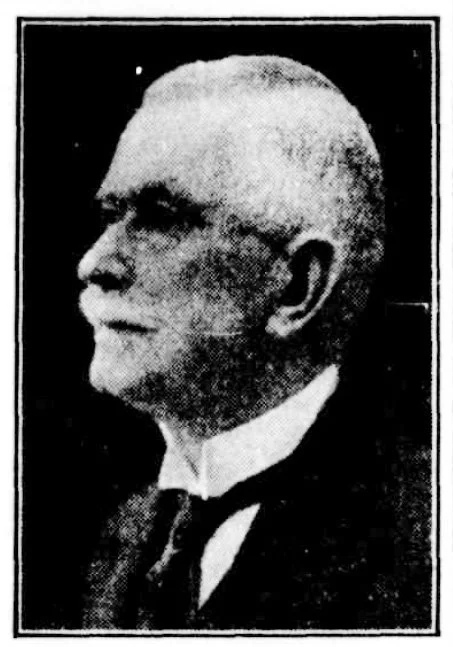
E. F. Pittman. Photograph: Sydney Morning Herald, 23 November 1932, p. 18
Edward Fisher Pittman was a geologist, mining administrator and public servant with the New South Wales Department of Mines. As Government Geologist and later Undersecretary for Mines, he played an important role in documenting and evaluating the early opal discoveries at Lightning Ridge in the early 20th century.
Pittman was born 31 July 1849 in Melbourne, Victoria, son of Joseph and Frances Pittman. He attended Scotch College before starting work in the chemical laboratory of the Victorian Geological Survey. After the Survey closed in in 1869, he trained as a mining surveyor at the Royal School of Mines in London, graduating in mining and metallurgy in 1876.
After returning to Australia, Pittman settled in Sydney and in 1878 he joined the New South Wales Department of Mines. He served in a number of technical and administrative positions, becoming Chief Mining Surveyor in 1883 and Government Geologist in 1891. In 1902 he was appointed Undersecretary of the Department of Mines.
Pittman was Department Undersecretary during the earliest years of opal mining at Lightning Ridge. In July 1903, not long after reports of opal discoveries near Wallangulla Tank began to attract public attention, Walgett Warden A. Ridley inspected the field and forwarded samples of opal to Pittman for consideration. Pittman noted that the opal-bearing sandstone horizon sweeping through White Cliffs in New South Wales and up into Southern Queensland had surfaced in the Walgett district, and that the occurrence of opal there was therefore not unexpected. His assessment and documentation of the Lightning Ridge field is among the earliest geological records of Lightning Ridge opal from a scientific perspective.
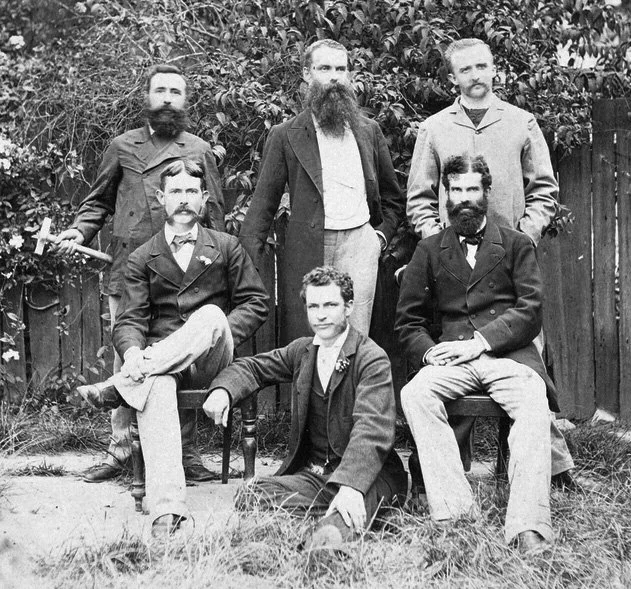
Staff of the New South Wales Department of Mines, 1879. Back row: Lamont Young, H. Wilkinson, C Cullen; Front row: E. F. Pittman, C. S. Wilkinson, J. E. Carne. Photograph: Mitchell Library, State Library of New South Wales.
Pittman's role as Mines Department Undersecretary placed him at the centre of government oversight during the initial years of the Lightning Ridge field. His correspondence, reports and geological evaluations provide valuable contemporary insight into early opal mining in the district.
Beyond his association with Lightning Ridge, Pittman was one of the most influential mining officials in New South Wales during the late 19th and early 20th centuries. He served on numerous boards, lectured in mining at the University of Sydney between 1893 and 1903, and was involved with the Australasian Association for the Advancement of Science and the Royal Society of New South Wales.
Pittman retired from public service in 1916 after almost forty years with the Department of Mines. He returned to Melbourne and settled at South Yarra, where he died on 18 November 1932 at the age of 83.

E. F. Pittman’s signature, sourced from correspondence advising travel dates for a visit to Lightning Ridge, 1912.
E. F. Pittman @ Find a Grave (cremation record).

Article: Research by Russell Gawthorpe and Leisa Carney, edited by Russell Gawthorpe. LRHS research compiled by Len Cram and Barbara Moritz. Sources: ‘Opal in the Walgett District’, Daily Telegraph, 13 July 1903, p. 4; Walgett Spectator, 25 March 1905; ‘Obituary: Mr. E. F. Pittman’, The Sydney Morning Herald, 23 November 1932, p. 18; ‘Edward Fisher Pittman’, item no. R00025677 (GS1948/003), New South Wales Department of Primary Industries; Australian Dictionary of Biography, Volume 11, 1988.